There is a kind of church growth that impresses people but does not necessarily produce disciples. It expands programs yet weakens pastoral care. It multiplies activity while quietly thinning theological depth. In many places today, churches are wrestling with that tension – how to move forward strategically without drifting spiritually.
That underlying burden shaped the 2026 JRAM Spring Pastors Summit in April, where pastors and ministry leaders gathered not merely to discuss organizational development, but to ask a more foundational question: What does it look like to build a church that remains faithful to Christ while preparing the next generation for mission?
Throughout the summit, one recurring conviction emerged with clarity: advancement in ministry cannot be separated from spiritual formation. The church does not move forward simply because structures improve, attendance grows, or systems become more efficient. The church advances only insofar as she remains anchored in Christ, dependent on the Holy Spirit, and committed to the Great Commission.
That conviction framed much of the summit’s emphasis on discipleship. JRAM leaders articulated a long-term vision stretching from 2024 to 2033 which is a deliberate effort to strengthen a discipleship culture rooted in small group-based pastoral care, leadership development, and intergenerational formation. The framework itself was practical: Small Groups, Pastoral Care Groups, and Hubs working together in coordinated pastoral oversight. But beneath the organizational language was a deeply biblical concern: the church must not raise consumers of ministry but disciples of Christ.
The church must move “from numbers to souls.”
One statement from the summit captured that burden well: the church must move “from numbers to souls.” That is an important distinction in an age increasingly shaped by metrics, visibility, and platform culture. Scripture never treats people as data points. Christ shepherds sheep by name. He does not merely gather crowds; He forms disciples.
This emphasis also shaped the summit’s presentation of the JRAM Membership Pathway, which outlined a process of discipleship from newcomer to volunteer, servant-leader, pastoral intern, and eventually pastoral leadership. The aim was not institutional ladder-climbing but intentional spiritual formation within accountable Christian community. In a ministry climate where many churches struggle to cultivate long-term leadership pipelines, the summit repeatedly stressed the importance of relational discipleship rather than passive attendance.
The concern for the next generation was especially striking. Drawing from Judges 2, Senior Pastor Aldrin Navo warned how quickly spiritual heritage can disappear: “It takes only one generation to lose a spiritual legacy.” That observation carries unusual weight today. Churches often assume doctrinal fidelity will naturally transfer to the next generation. Scripture suggests otherwise. Faithfulness must be taught, modeled, defended, and embodied repeatedly.
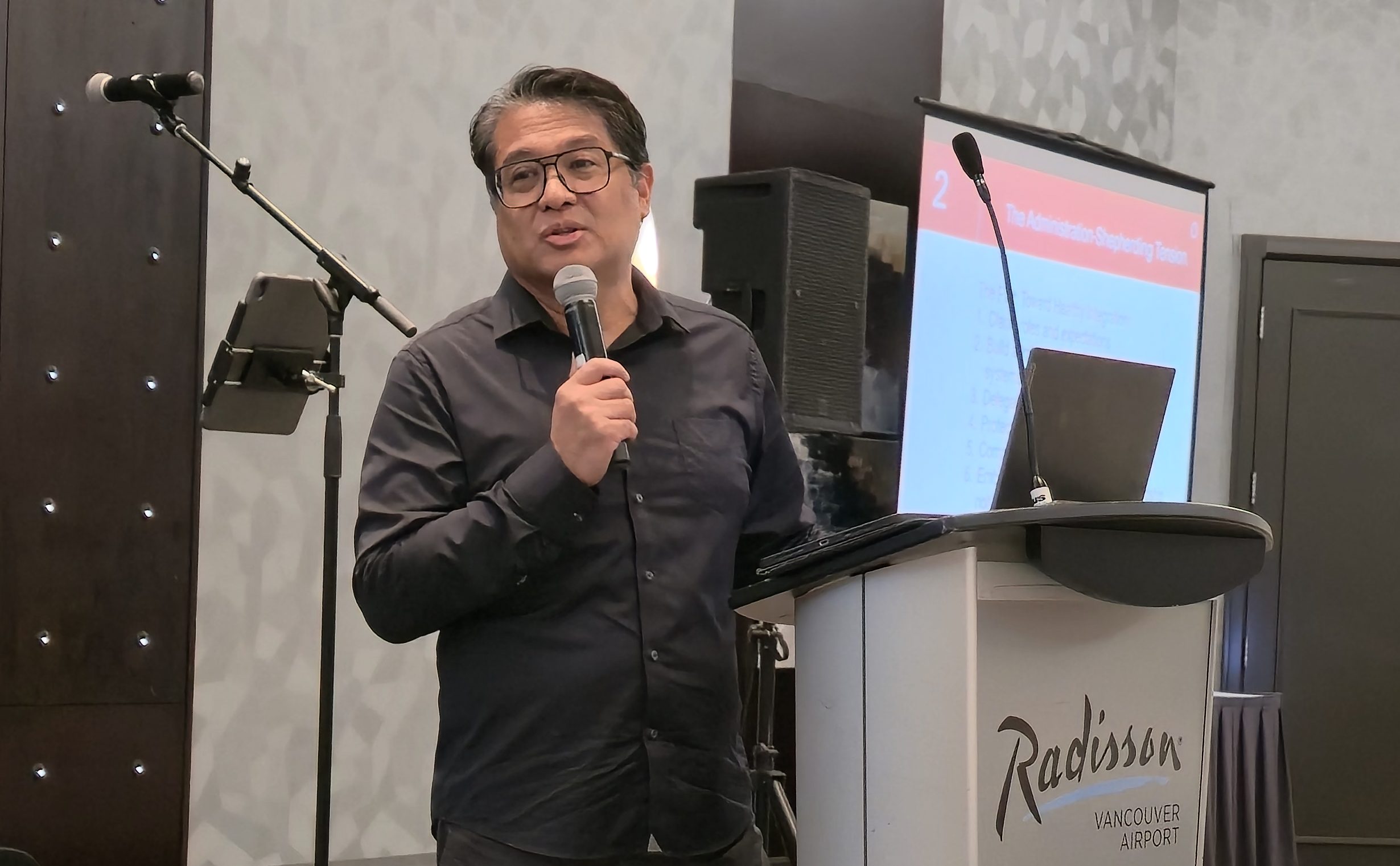
“It takes only one generation to lose a spiritual legacy.”
– JRAM Senior Pastor Aldrin Navo
The summit’s strongest moments came not during strategic planning discussions, however, but during its reminders of dependence upon God. JRAM Education Pastor Genis Misola reflected candidly on personal trials, pressures, and suffering within his family. Rather than presenting ministry leadership triumphantly, he spoke openly about vulnerability, prayer, and learning again that “only God is completely trustworthy.”
That honesty mattered because ministry leaders are often tempted to trust methods more than the Lord who alone gives growth. Churches can become so consumed with execution, expansion, and optimization that they quietly drift into functional self-reliance. Yet throughout Scripture, God repeatedly brings His people into wilderness seasons precisely to teach them dependence upon Him.
The summit also challenged leaders to think carefully about mission. One session emphasized that the church is not called merely to maintain programs but to send people into the world as ambassadors of Christ. “We are not called to build our own mission,” JRAM Asia Executive Pastor Edith Mendoza said. “We are called to join God’s mission.”
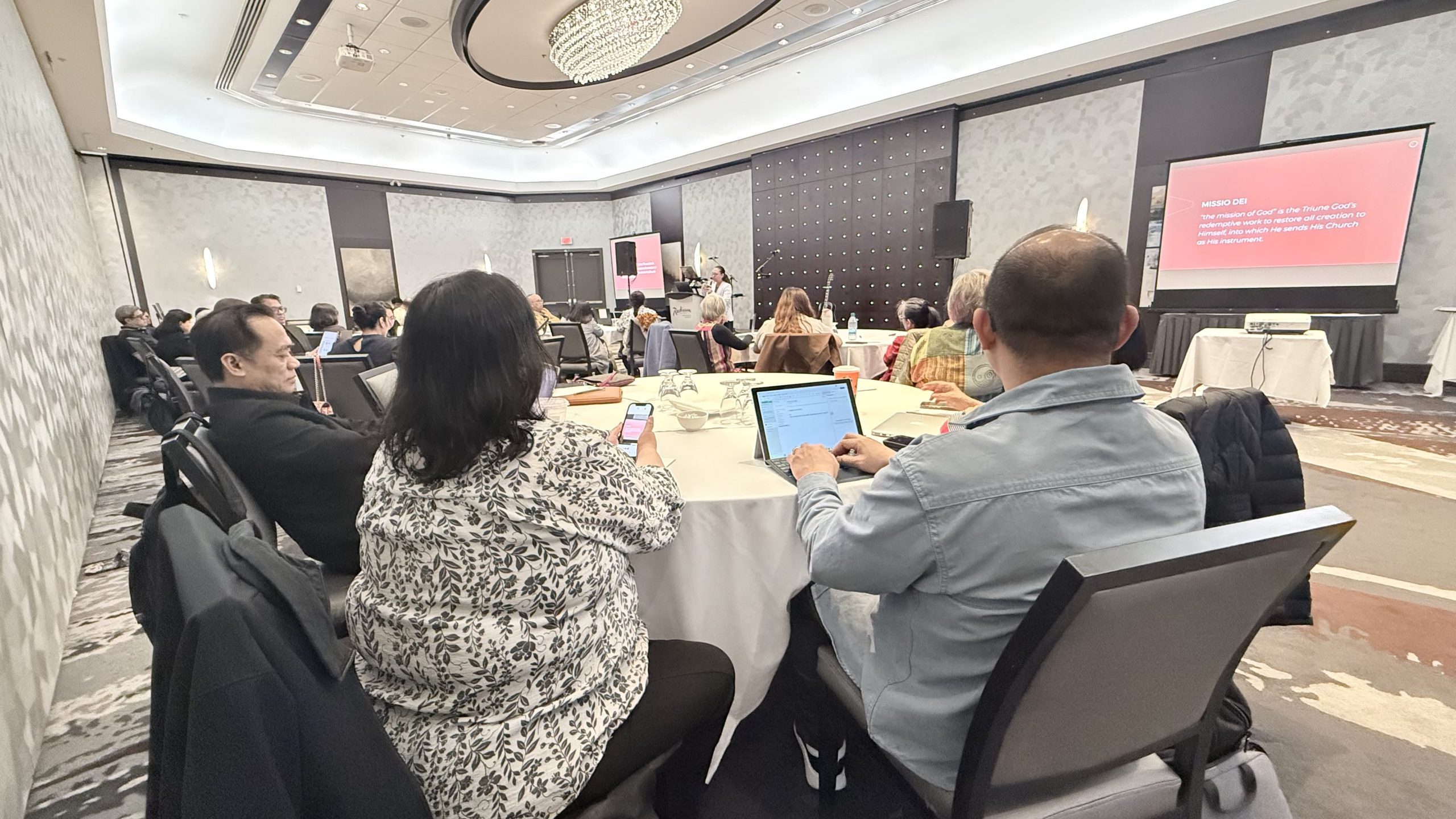
MISSIO DEI
“We are not called to build our own mission.
We are called to join God’s mission.”
– JRAM Asia Executive Pastor Edith Mendoza
That theological framing matters. Mission does not originate in the creativity of the church but in the redemptive purpose of God Himself. The church participates in what God is already doing through Christ by the power of the Holy Spirit. From urban centers to tribal communities, from local outreach to disaster response, the summit’s Five-Fold Mission Streams reflected a desire to proclaim and demonstrate the gospel in tangible ways.
Still, the summit’s most enduring contribution may not be its structures, metrics, or ministry frameworks. It may be its repeated insistence that strategy without holiness is hollow, and organization without gospel conviction eventually collapses under its own weight.
In one sense, that has always been the church’s challenge. The question is never merely whether ministry is growing. The deeper question is whether Christ is being treasured, proclaimed, obeyed, and passed on faithfully to the next generation.
For churches seeking to advance today, that distinction changes everything. It reminds us that true ministry success cannot be measured by activity alone, but by spiritual faithfulness. Programs may expand, structures may improve, and strategies may evolve, but if the gospel is not central, the church eventually loses the very thing that gives her life.
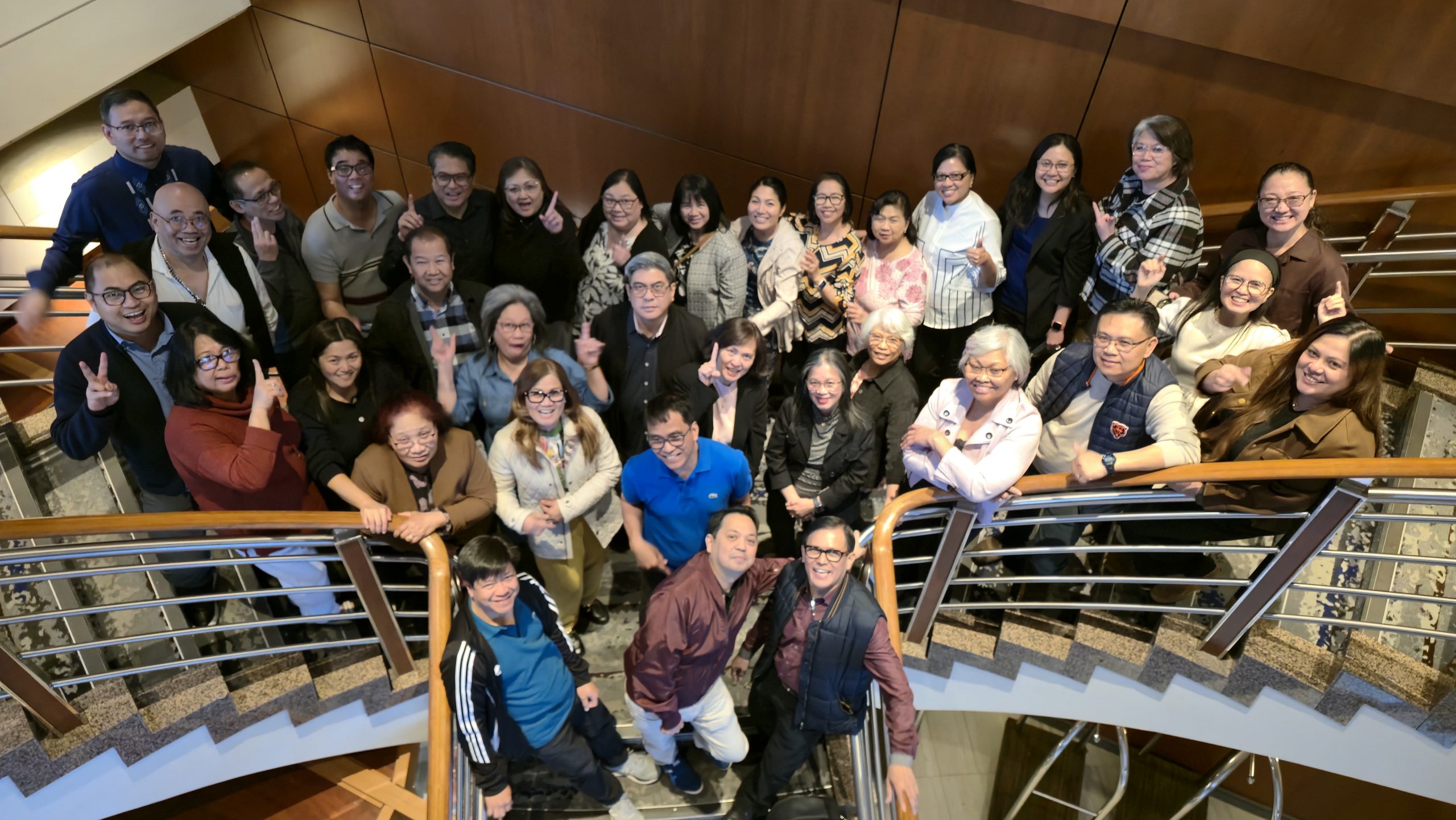
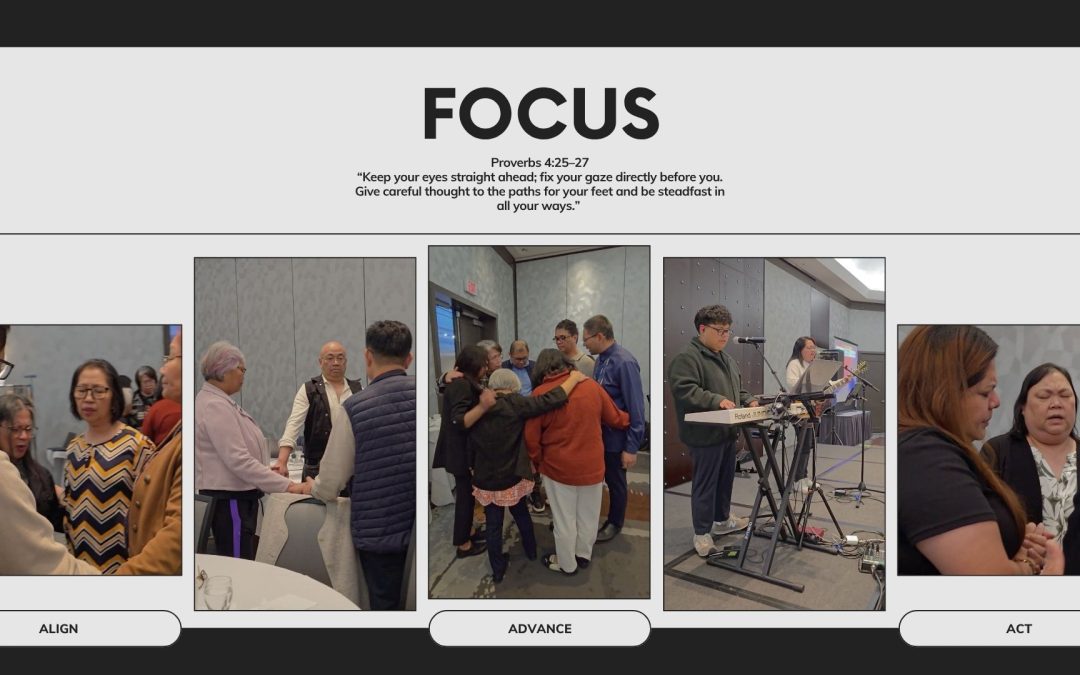
This is why the summit’s call to FOCUS: Align. Advance. Act. carried such weight. Before the church can advance effectively, she must first be aligned rightly – her eyes fixed on Christ, her heart anchored in Scripture, and her mission shaped by the Great Commission. As Proverbs 4:25–27 exhorts, “Keep your eyes straight ahead; fix your gaze directly before you. Give careful thought to the paths for your feet and be steadfast in all your ways.”
In a generation easily distracted by noise, urgency, and visibility, the church must remain steadfast in what matters most: raising disciples who know Christ, love His church, live His gospel, and faithfully carry His truth from generation to generation. ✢